
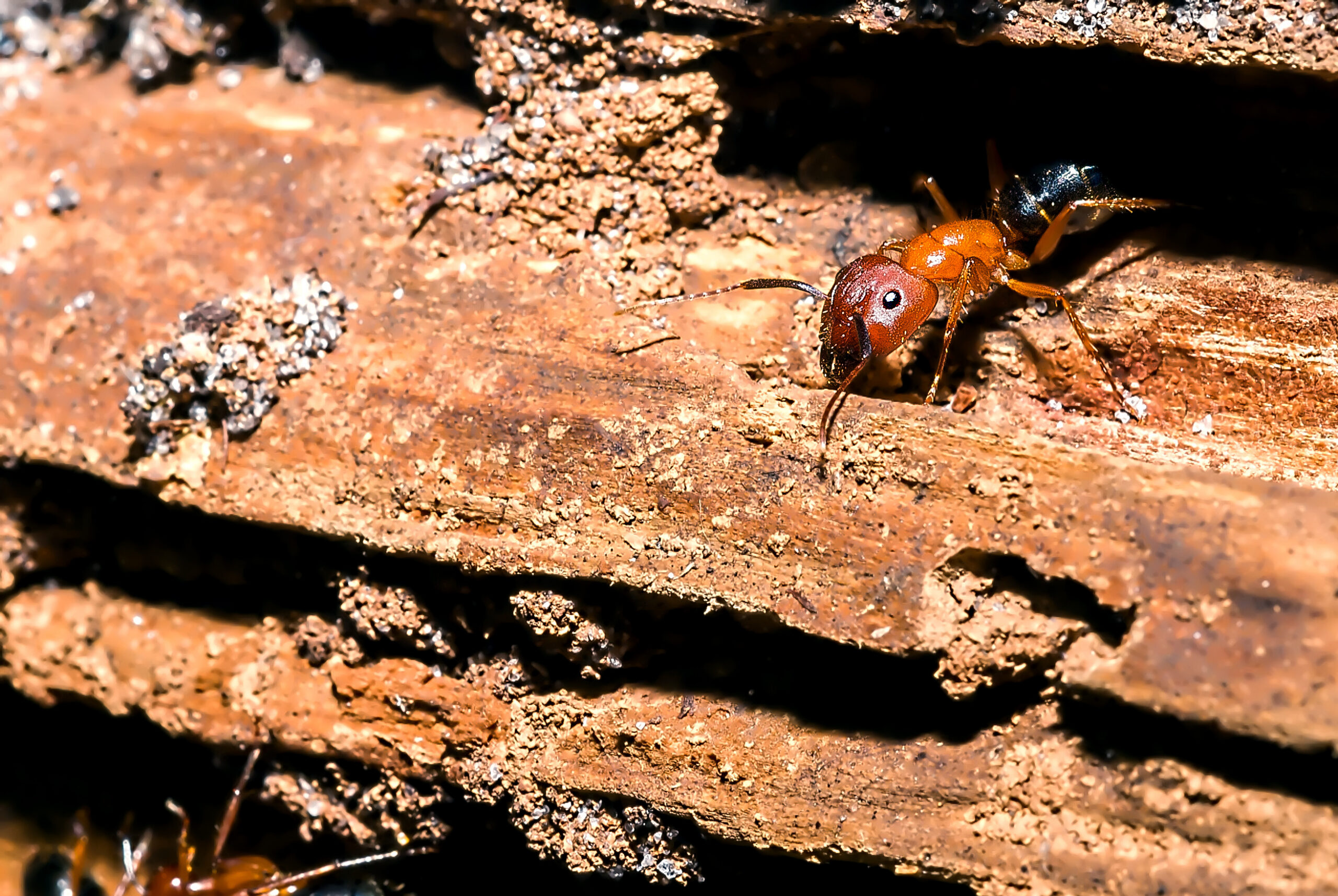
Carpenter ants are one of the most common wood-nesting ants homeowners encounter, and their activity tends to follow predictable seasonal patterns. If you’ve noticed ants appearing during certain months, you’re not alone, carpenter ant activity changes throughout the year based on temperature, moisture, and colony growth cycles.
Understanding when carpenter ants are most active can help you identify early warning signs, prevent infestations, and take action before structural damage becomes a concern.
Understanding Carpenter Ants
Carpenter ants are large ants known for nesting inside wood. Unlike termites, they don’t eat wood for nutrition, instead, they excavate it to create galleries where their colonies grow.
Overview of Carpenter Ants
Carpenter ants are typically found in wooded environments, but they adapt easily to residential areas. They are especially attracted to damp or decaying wood, making homes with moisture issues more vulnerable to nesting.
Physical Characteristics of Carpenter Ants
These ants are usually black, red, or a mix of both colors and can grow up to half an inch long. Their size often makes them stand out compared to smaller household ants. They have a narrow waist, bent antennae, and a rounded thorax.
Differences Between Carpenter Ants and Other Ant Species
Carpenter ants are often confused with termites or pavement ants. However, termites have straight antennae and thick waists, while carpenter ants have clearly segmented bodies. Carpenter ants also leave behind sawdust-like debris called frass, which termites do not.
Identifying Carpenter Ants
Recognizing carpenter ants early is one of the best ways to prevent long-term damage.
What Do Carpenter Ants Look Like?
Carpenter ants are larger than most ants found indoors and often appear near windows, baseboards, or damp areas. Their shiny bodies and slow, deliberate movement patterns make them easier to notice.
How to Distinguish Carpenter Ants From Other Ants
Some key identification clues include:
- Large size compared to common house ants
- Preference for wood and moist areas
- Visible trails at night when they forage
These traits help differentiate them from smaller sugar ants or pavement ants.
Signs of a Carpenter Ant Infestation
Early warning signs may include:
- Piles of wood shavings near walls or trim
- Rustling sounds inside wood or wall voids
- Winged ants appearing indoors during spring
Repeated sightings often indicate a nearby nest.
Behavior and Habitat of Carpenter Ants
Carpenter ant behavior changes with the seasons, which explains why they seem to appear suddenly at certain times of year.
Nesting Habits of Carpenter Ants
Carpenter ants build nests inside wood, especially areas softened by moisture. Common nesting sites include window frames, decks, crawl spaces, and wall voids. Colonies often create satellite nests that spread throughout a structure.
Feeding Habits of Carpenter Ants
They primarily feed on sugars and proteins. Outdoors, they hunt insects or collect sweet substances from plants. Indoors, they may forage for crumbs, pet food, or moisture sources.
Seasonal Activity Patterns of Carpenter Ants
Carpenter ants are most active from late spring through early fall.
- Spring: Swarming season begins as winged reproductive ants emerge.
- Summer: Peak foraging activity occurs as colonies expand.
- Fall: Ants search for warm nesting sites, sometimes moving indoors.
- Winter: Activity slows, but indoor colonies can remain active.
Warm temperatures and increased humidity often trigger higher activity levels, which is why sightings increase during these months.
Dealing With Carpenter Ant Infestations
Knowing when carpenter ants are active helps you take preventative steps at the right time.
Prevention Methods to Avoid Carpenter Ant Infestations
Reducing moisture and sealing entry points are two of the most effective prevention strategies. Regularly inspecting wood structures, trimming vegetation away from the home, and keeping firewood stored away from walls can make your property less attractive to nesting ants.
Steps to Take if You Suspect a Carpenter Ant Infestation
If you notice multiple ants indoors, especially at night or during cooler seasons, it’s a good idea to investigate further. Checking for damp wood, monitoring trails, and identifying entry points can help determine whether a colony is nearby.
Effective Treatment Options for Carpenter Ant Removal
Targeted treatments that reach the nest are often more effective than surface sprays alone. Because carpenter ant colonies can be hidden inside walls or structures, professional inspection is sometimes necessary to fully eliminate the problem.
Ecological Role of Carpenter Ants
Although they can be damaging in homes, carpenter ants also play a role in nature.
Importance of Carpenter Ants in the Ecosystem
Carpenter ants help break down decaying wood in forests, contributing to nutrient recycling. Their tunneling activity also creates habitats for other small organisms.
Positive Aspects of Carpenter Ants in Nature
In outdoor environments, carpenter ants help control certain insect populations by feeding on pests, supporting ecological balance.
Impact of Carpenter Ants on Their Environment
While beneficial outdoors, carpenter ants become problematic when they nest inside human structures. Understanding this balance helps homeowners decide when management is necessary.
When Are Carpenter Ants Most Active? A Quick Summary
Carpenter ants follow predictable seasonal cycles:
- Highest activity: Late spring and summer
- Increased indoor sightings: Fall and winter
- Swarming season: Spring, when winged ants appear
Knowing these patterns allows you to monitor activity before colonies grow larger.
Bottom Line
Carpenter ants are most active during warm months, especially late spring through summer, when colonies expand and foraging increases. However, indoor nests can remain active year-round, making early detection and prevention essential.
If you notice repeated sightings, wood debris, or signs of nesting, addressing the issue early can help protect your home from long-term structural damage.