
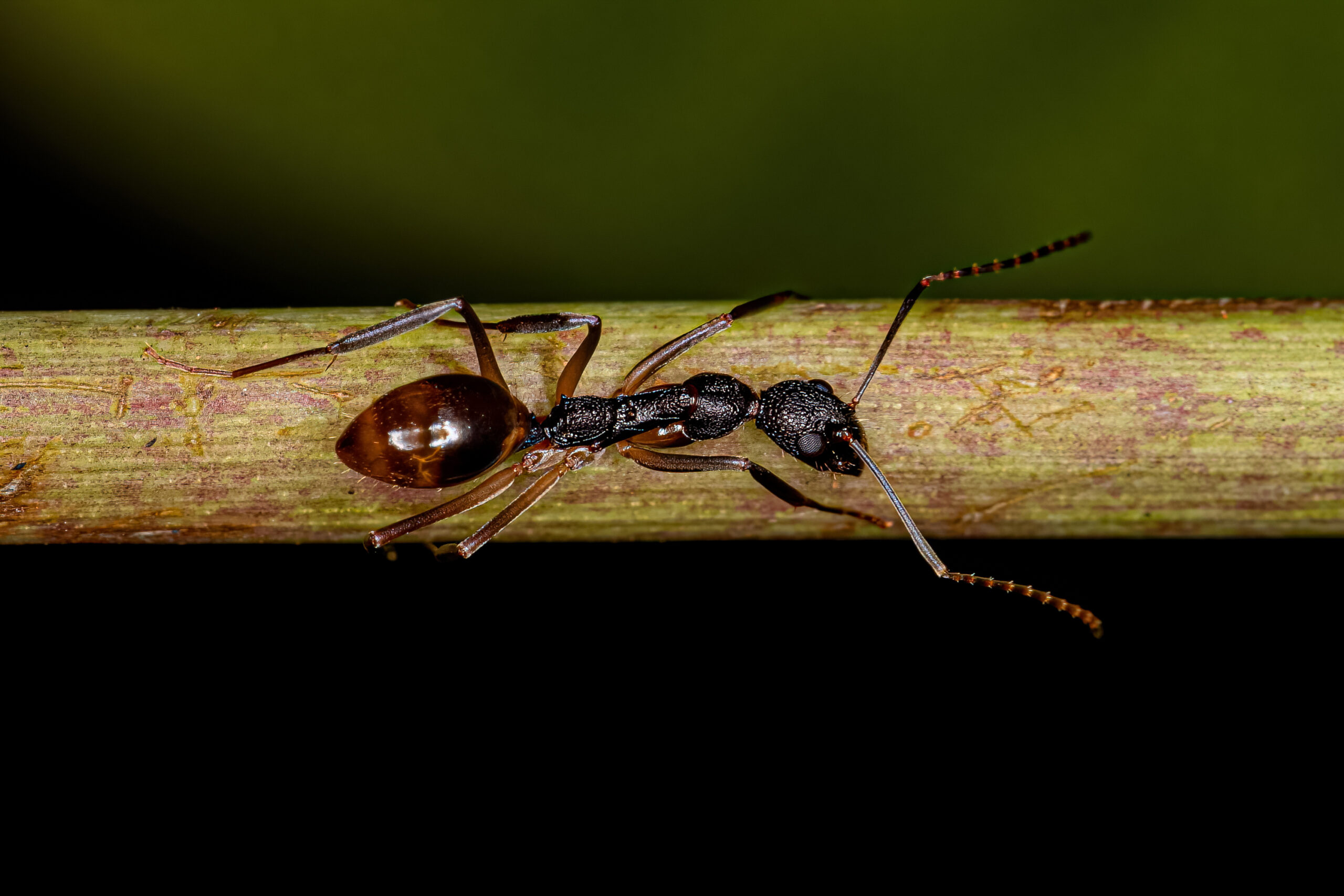
If you’ve noticed small dark ants forming trails across your kitchen counters or bathroom sinks, you may be dealing with odorous house ants. These tiny pests are one of the most common household invaders, especially during warmer months.
But what actually attracts odorous house ants into your home in the first place?
Understanding what draws them in is the key to preventing recurring infestations.
Identifying Odorous House Ants
Before you can stop them, you need to be sure that’s what you’re dealing with.
What Do Odorous House Ants Look Like?
Odorous house ants are small, typically about 1/16 to 1/8 inch long. They are dark brown to black and have a smooth, slightly shiny body.
Unlike some ant species that vary in size within a colony, worker odorous house ants are usually uniform in appearance.
How Can I Distinguish Odorous House Ants From Other Ant Species?
The easiest way to confirm their identity is by smell.
When crushed, odorous house ants release a strong odor often described as:
- Rotten coconut
- Sour milk
- Blue cheese
This distinctive smell is what gives them their name.
They also tend to travel in visible trails, especially near food sources and moisture areas.
Behavior and Habitat of Odorous House Ants
To understand what attracts them, it helps to understand how they live.
Where Do Odorous House Ants Typically Nest?
Outdoors, they commonly nest under:
- Rocks
- Mulch
- Logs
- Leaf litter
- Debris piles
Indoors, they often establish colonies in:
- Wall voids
- Under flooring
- Around plumbing fixtures
- Near water-damaged wood
They prefer moist environments and will relocate their nests if conditions change.
What Do Odorous House Ants Eat?
These ants are especially attracted to sweets. Their diet commonly includes:
- Sugar and syrup
- Fruit
- Soda spills
- Honey
- Pet food
They also feed on grease and protein sources when available.
Outside, they frequently feed on honeydew produced by aphids and other insects.
What Attracts Odorous House Ants to Homes?
Now to the core question. Several factors commonly attract odorous house ants indoors.
1. Food Sources
Even tiny crumbs or sticky residue can draw them inside. Because they rely heavily on pheromone trails, once one ant finds food, dozens may follow quickly.
Open trash cans, unsealed pantry goods, and spills are major attractants.
2. Moisture
Odorous house ants are highly attracted to water sources. Leaky pipes, condensation around sinks, and damp basements provide ideal conditions.
In Utah’s climate, they often move indoors during dry periods searching for reliable moisture.
3. Seasonal Weather Changes
These ants are most active during spring and summer. After heavy rainfall or temperature swings, colonies may relocate, sometimes straight into homes.
Environmental shifts are a major trigger for sudden infestations.
4. Easy Entry Points
They can enter through extremely small gaps around:
- Windows
- Door frames
- Utility lines
- Foundation cracks
Even tiny openings provide access.
5. Aphid Activity in Landscaping
Outdoor aphid infestations can increase ant activity near your home. Since ants protect aphids in exchange for honeydew, landscaping issues can indirectly increase indoor ant pressure.
Signs of an Odorous House Ant Infestation
Recognizing early signs can help prevent larger problems.
Common indicators include:
- Long trails of small dark ants
- Ants emerging from electrical outlets or wall cracks
- Increased activity after rain
- Ants gathering around sinks or dishwashers
Seeing ants repeatedly in the same areas often suggests a nearby colony.
Are Odorous House Ants Harmful?
Odorous house ants are not known to:
- Bite aggressively
- Sting
- Cause structural damage like carpenter ants
However, they can contaminate food. Because they travel through drains, trash, and outdoor debris, they may carry bacteria onto surfaces and food preparation areas.
While not considered a major health threat, they are unsanitary and disruptive.
Control and Elimination Methods for Odorous House Ants
Getting rid of them requires more than surface sprays.
What Are Effective Ways to Get Rid of Odorous House Ants?
Successful control often includes:
- Identifying and eliminating food sources
- Sealing entry points
- Using targeted bait systems
- Treating nesting areas
Spraying visible ants alone can actually worsen the problem. When colonies are disturbed improperly, they may split and create multiple satellite nests.
Are There Natural Methods to Prevent Odorous House Ants?
Some homeowners use:
- Vinegar to disrupt scent trails
- Diatomaceous earth in entry areas
- Essential oils as short-term deterrents
These methods may reduce activity temporarily but rarely eliminate established colonies.
Preventive Measures Against Odorous House Ants
Long-term prevention focuses on making your home less attractive.
Helpful steps include:
- Storing food in airtight containers
- Cleaning spills immediately
- Fixing plumbing leaks
- Reducing outdoor moisture near foundations
- Trimming vegetation away from exterior walls
Regular inspection is especially important during peak ant season.
When Should You Call a Professional?
Consider contacting a professional if:
- Ants return repeatedly after DIY treatments
- Trails appear in multiple rooms
- Activity increases after spraying
- The infestation lasts more than a few weeks
Professional pest control services can locate hidden nests and apply treatments designed to eliminate entire colonies, not just the ants you see.
How Do Odorous House Ants Communicate?
One reason they are so persistent is their communication system. They use pheromones to mark trails to food and alert other colony members. This chemical signaling allows rapid coordination and is why infestations can escalate quickly.
Disrupting these trails is critical for effective control.
Bottom Line
Odorous house ants are primarily attracted by:
- Food
- Moisture
- Weather changes
- Easy access points
While they don’t cause structural damage, they can contaminate food and become persistent household nuisances.
Understanding what attracts them is the first step toward prevention. If you’re dealing with recurring ant trails or suspect a hidden colony, Preventive Pest Utah can help assess the situation and provide targeted, long-term solutions.
Stopping the attraction stops the infestation.