
When homeowners start seeing ants regularly around their property, one of the first questions they ask is: what is the hardest ant to get rid of?
While several ant species can be persistent pests, velvety tree ants are often considered one of the most difficult to control once they establish colonies near homes. Their nesting habits, colony structure, and outdoor habitats make them particularly challenging to eliminate.
Understanding how velvety tree ants behave, and what makes them so resilient, can help homeowners prevent infestations before they become difficult to manage.
Introduction to Velvety Tree Ants
Velvety tree ants are a species of ant commonly found throughout western North America. They are known for their dark coloration, fast-moving behavior, and tendency to build nests in trees, soil, or decaying wood.
Although they primarily live outdoors, they sometimes wander into homes in search of food or water.
Overview of Velvety Tree Ants
Velvety tree ants belong to the genus Liometopum and are most often encountered in wooded or suburban areas where trees and landscaping provide ideal nesting sites.
They are especially active during warmer months and can form large colonies that contain thousands of workers.
Importance of Understanding This Ant Species
Knowing how velvety tree ants behave can help homeowners recognize potential problems early. Because they often nest outdoors but forage over long distances, people may see ants inside without realizing the colony is located elsewhere on the property.
Early identification is key to preventing larger infestations.
Characteristics and Behavior of Velvety Tree Ants
Velvety tree ants have several traits that distinguish them from other ant species.
Physical Appearance of Velvety Tree Ants
These ants are typically medium-sized and dark brown to black in color. Their bodies often appear slightly fuzzy or “velvety,” which is where their common name originates.
Other identifying characteristics include:
- Smooth, rounded thorax
- Slightly shiny abdomen
- Quick, erratic movement when disturbed
Their size and color can sometimes cause them to be confused with carpenter ants.
Behavioral Traits of Velvety Tree Ants
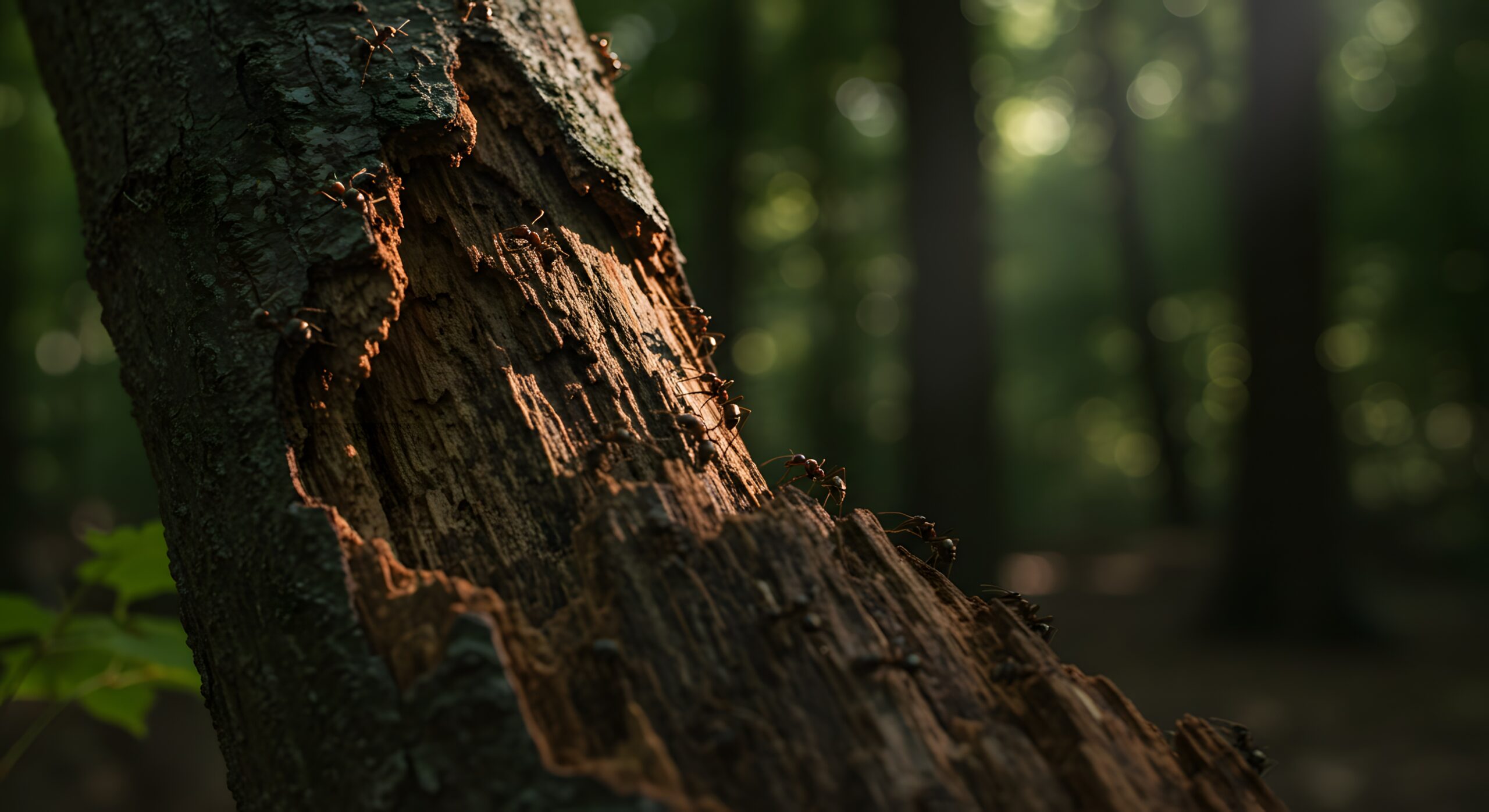
Velvety tree ants are highly organized and cooperative. Workers travel in large groups when searching for food, creating visible foraging trails across trees, fences, and exterior walls.
They are also known to defend their territory aggressively if their colony is threatened.
Interaction With Other Ants and Species
Velvety tree ants can dominate other insect populations in their environment. They often compete with other ant species for food sources and territory.
In some ecosystems, they even protect aphids or other insects that produce honeydew, which they consume as a food source.
Habitat and Distribution of Velvety Tree Ants
Velvety tree ants are primarily outdoor ants that prefer natural environments with access to trees, vegetation, and organic debris.
Typical Habitats Where Velvety Tree Ants Are Found
These ants commonly nest in:
- Tree cavities
- Decaying wood
- Under bark
- Soil near tree roots
- Landscaping debris
In urban environments, they may also nest under patios, inside wall voids, or near foundations.
Factors Influencing Their Distribution
Velvety tree ants thrive in areas where food and shelter are readily available. Landscaped properties with mature trees, mulch beds, and dense vegetation provide ideal conditions for colonies to grow.
Warm temperatures also increase their activity levels, which is why they are most noticeable during late spring and summer.
Relationship Between Habitat and Behavior
Because they often nest in trees or outdoor structures, velvety tree ants can travel long distances while foraging. This means ants seen inside a home may actually be coming from a colony located outside.
Their wide foraging range makes locating the nest more difficult.
Methods for Managing and Controlling Velvety Tree Ants
Because of their large colonies and outdoor nesting habits, velvety tree ants can be challenging to control.
Identifying a Velvety Tree Ant Infestation
Common signs of velvety tree ants around your property include:
- Trails of ants moving along tree trunks or fences
- Large numbers of ants foraging on exterior walls
- Ant activity near landscaping or mulch beds
- Workers entering the home through small cracks or gaps
Repeated sightings often indicate a nearby colony.
Effective Pest Control Measures
Managing velvety tree ants usually requires a combination of strategies. These may include:
- Eliminating food sources around the home
- Sealing cracks and entry points
- Removing decaying wood or debris near structures
- Targeted treatments to reduce colony activity
Because colonies may be located in trees or underground, professional inspection is sometimes necessary to locate the primary nest.
Prevention Strategies to Avoid Infestations
Preventative steps can greatly reduce the likelihood of an infestation.
Some helpful measures include:
- Keeping tree branches trimmed away from the home
- Reducing moisture and organic debris near foundations
- Storing firewood away from exterior walls
- Maintaining clean outdoor areas free of food waste
These actions make your property less attractive to ants searching for nesting sites.
Interesting Facts About Velvety Tree Ants
Despite their reputation as difficult pests, velvety tree ants have several fascinating traits.
Unique Characteristics of Velvety Tree Ants
Velvety tree ants are known for their strong cooperative behavior. Workers communicate using pheromones to coordinate food collection and colony defense.
Their colonies can grow quite large and may occupy multiple nesting areas connected by foraging trails.
Origin of the Name “Velvety Tree Ants”
Their name comes from the fine hairs covering their bodies, which give them a slightly velvety appearance when viewed closely.
This texture distinguishes them from many other ant species with smoother bodies.
Contribution of Velvety Tree Ants to Their Ecosystem
In natural environments, velvety tree ants help maintain ecological balance by feeding on other insects and scavenging organic material.
They also serve as prey for birds, reptiles, and other insect-eating animals.
Bottom Line
Velvety tree ants are one of the more persistent ant species homeowners may encounter. Their large colonies, outdoor nesting habits, and ability to travel long distances while foraging can make them difficult to eliminate once established.
While they rarely cause structural damage, their presence around homes can quickly become a nuisance.
If you notice consistent ant trails or suspect a nearby colony, professional pest control may be the most effective way to locate and address the source of the problem.
The team at Preventive Pest Utah can help identify ant species, locate hidden nests, and provide targeted treatments designed to protect your home long-term.
Early action is the best defense against persistent ant infestations.