
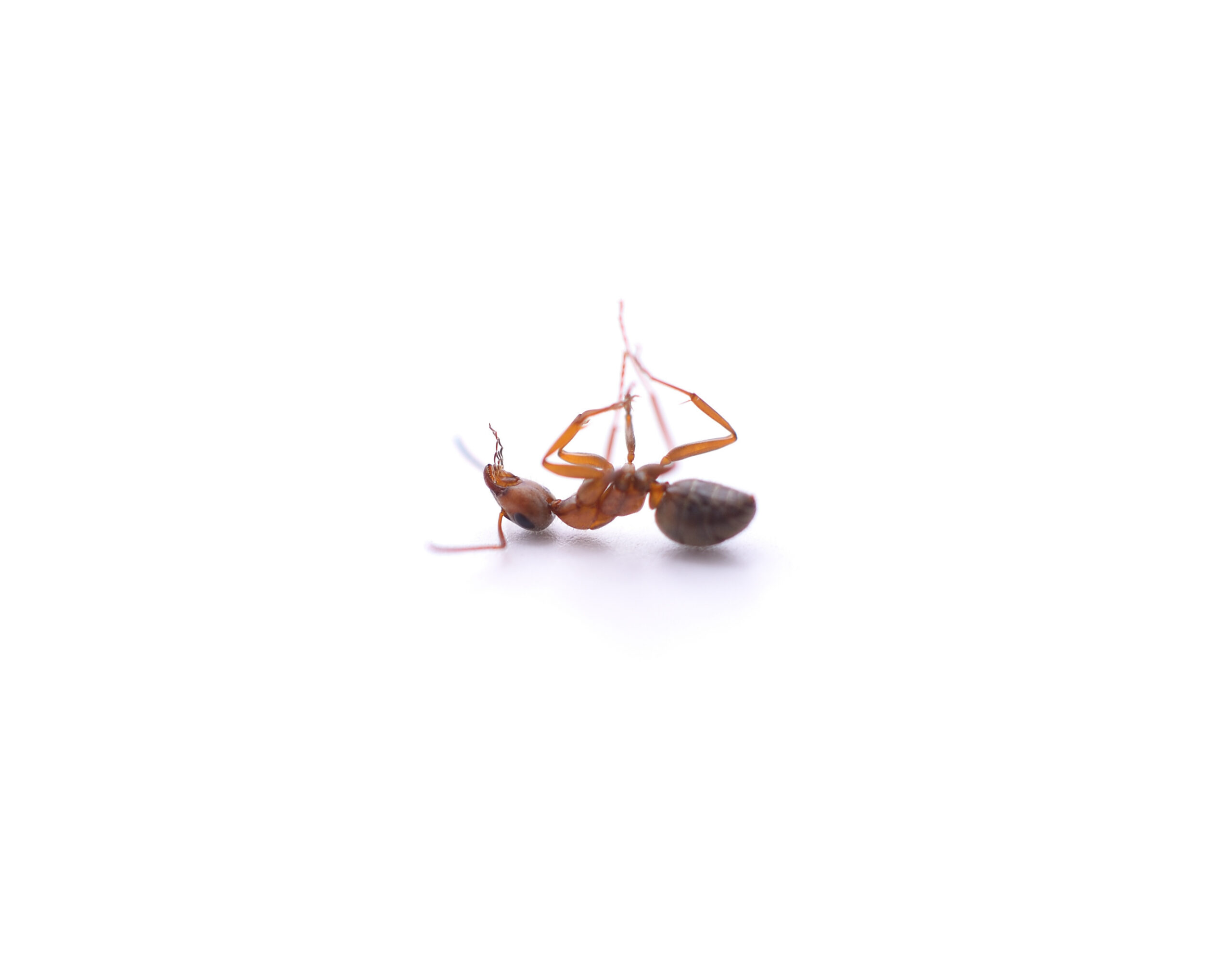
You see a line of ants crossing the kitchen floor. Your first instinct is probably pretty simple: squish them.
It may take care of the ants you can see, but it usually does very little to solve the actual problem. In some situations, repeatedly killing visible ants can even make it harder to understand where the colony is located and why ants keep entering your home.
If you’re dealing with an ongoing ant problem, successful ant control in Utah is less about killing individual ants and more about finding and addressing the colony behind them.
Here’s why.
Why Squishing Ants Doesn’t Get Rid of an Infestation
The ants walking around your kitchen, bathroom, basement, or patio are typically worker ants. Their job is to leave the nest, search for resources, and bring food back to the colony.
That means the ants you see are usually only a fraction of the total population.
A colony may contain workers, developing ants, and one or more queens hidden somewhere you can’t easily reach. The nest could be outside near your foundation, beneath landscaping, inside a wall void, under concrete, or in another protected area.
You could kill dozens of workers without ever affecting the colony producing them.
Ants Communicate Through Pheromone Trails
One reason ants seem to travel in organized lines is that they communicate chemically.
When a worker finds food or another valuable resource, it can leave a pheromone trail that other ants follow. As more ants use the route, the trail can become more established.
Squishing a few workers doesn’t necessarily remove that trail.
Cleaning the area can help remove food residue and disrupt pheromone trails, but if the colony is still active, other ants may eventually establish another route.
Some Ant Problems Can Become More Complicated When Disturbed
This is another reason indiscriminately spraying or killing visible ants isn’t always the best strategy.
Certain ant species can have multiple queens or interconnected nesting sites. When colonies are stressed or disturbed, some species may relocate or split into additional nesting groups.
That’s why identifying the species and understanding its behavior can be important before choosing a treatment.
What Should You Do Instead of Squishing Ants?
If you see one random ant, removing it isn’t going to create an infestation. The bigger issue is what you do when ants keep appearing.
Instead of focusing only on individual workers, start looking for patterns.
Where are the ants entering the room? Where does their trail disappear? Are they concentrated around a sink, pantry, window, exterior wall, or pet food bowl?
Those clues can help reveal what is attracting them and potentially where they’re coming from.
A few useful first steps include:
- Clean food and drink residue
- Store food in sealed containers
- Remove accessible pet food
- Fix leaking faucets or plumbing
- Empty trash regularly
- Seal obvious cracks and gaps
These steps make your home less attractive, but an established colony may still require direct treatment.
Why Ants Are So Common in Utah Homes
Utah gives ants plenty of opportunities to thrive.
Warm spring and summer temperatures increase ant activity, while Utah’s dry conditions can push colonies to search more aggressively for reliable water sources.
Your home can provide exactly what they need.
Kitchens, bathrooms, laundry rooms, basements, and irrigated landscaping can all offer moisture. Food crumbs, garbage, grease, pet food, and pantry items provide additional resources.
As outdoor conditions change, ant activity around homes can change with them.
Utah’s Weather Can Make Ant Problems Feel Sudden
You might go weeks without noticing ants and then suddenly see dozens.
That doesn’t necessarily mean the colony appeared overnight.
Changes in temperature, rainfall, irrigation, or food availability can change where ants forage. A colony that has been living outside for months may suddenly begin sending workers indoors.
This is one reason effective ant control in Utah should account for both the interior and exterior of a property.
What Types of Ants Are Common in Utah?
Utah is home to numerous ant species, and identifying exactly which one you’re dealing with can affect the best approach to treatment.
Homeowners may encounter odorous house ants, pavement ants, carpenter ants, field ants, and other species.
Some are primarily nuisance pests. Others can create additional concerns.
Carpenter ants, for example, don’t eat wood like termites do, but they excavate wood to create nesting galleries. If they’re nesting in moisture-damaged structural wood, their presence shouldn’t be ignored.
Odorous house ants present a different challenge. These small ants can establish large colonies and may have multiple nesting sites, making surface-level treatment frustrating for homeowners.
Does DIY Ant Control Work?
Sometimes.
If you’re seeing occasional ants coming through an obvious entry point, sanitation and exclusion may be enough to significantly reduce activity.
Baits can also be useful because they work differently from contact sprays. Instead of immediately killing a worker, the goal is for foraging ants to interact with the bait and potentially carry it back toward the colony.
However, DIY treatment becomes more difficult when you don’t know what species you’re dealing with, where the nest is located, or how large the infestation has become.
The Common DIY Mistake We See
One of the most common patterns with ant problems is treating only what’s visible.
Ants appear along a baseboard, so that baseboard gets sprayed. The ants disappear.
Then they show up somewhere else.
The homeowner treats the new location, and the cycle continues.
The issue isn’t necessarily that nothing is working. It’s that the treatment is focused on the symptom rather than the source.
Good ant control starts by asking why the ants are there and where the colony is located—not simply how to kill the ants walking across the floor.
When Is It Time for Professional Ant Control?
A few ants don’t always require professional pest control.
Persistent activity is another story.
Consider professional treatment when:
- Ant trails repeatedly return
- Ants appear in multiple rooms
- DIY treatments aren’t working
- You can’t locate the source
- You suspect carpenter ants
- Activity continues despite cleaning and sealing
At that point, you’re probably dealing with more than a handful of wandering workers.
Choosing an Ant Control Service in Utah
Not every ant infestation should be approached exactly the same way.
A good pest control company should first understand what kind of ant is causing the problem, where activity is concentrated, and what environmental conditions may be contributing to it.
Ask how the company approaches identification, treatment, prevention, and follow-up.
Price matters, but the cheapest treatment isn’t necessarily the best value if you’re calling someone else a few weeks later because the ants returned.
Why Choose Preventive Pest Control for Ant Control in Utah?
At Preventive Pest Control, we don’t want to simply make the ants you see disappear for a day.
The goal is to understand the infestation.
That means looking at the species involved, where ants are traveling, what may be attracting them, where colonies may be established, and what can be done to reduce future activity.
Utah’s climate creates its own pest pressures, and local experience matters. Ant activity can change throughout the season as temperatures, moisture, landscaping, and food availability change.
A prevention-focused approach helps address both the current problem and the conditions that could encourage ants to return.
How to Make Your Utah Home Less Attractive to Ants
Professional treatment works best when it’s combined with good prevention.
Start by reducing food and water sources inside your home. Wipe down counters, clean beneath appliances, store pantry foods properly, and avoid leaving pet food accessible for long periods.
Check beneath sinks and around appliances for leaks or moisture.
Outside, look for cracks around the foundation, gaps around utility penetrations, vegetation touching the home, and other potential access points.
You don’t need to turn your home into a fortress. The goal is simply to make it harder for ants to find an easy source of food, water, and shelter.
Bottom Line
So, why shouldn’t you squish ants in your house?
Because killing the ants you see doesn’t necessarily do anything about the colony you can’t see.
If ants keep showing up, they’re probably coming from an established nest and searching for something your home provides. The more useful question isn’t “How do I kill these ants?” It’s “Why are they here, and where are they coming from?”
If you’re tired of chasing ant trails from one room to another, Preventive Pest Control can help identify the source and develop an ant control plan built for your Utah home.