
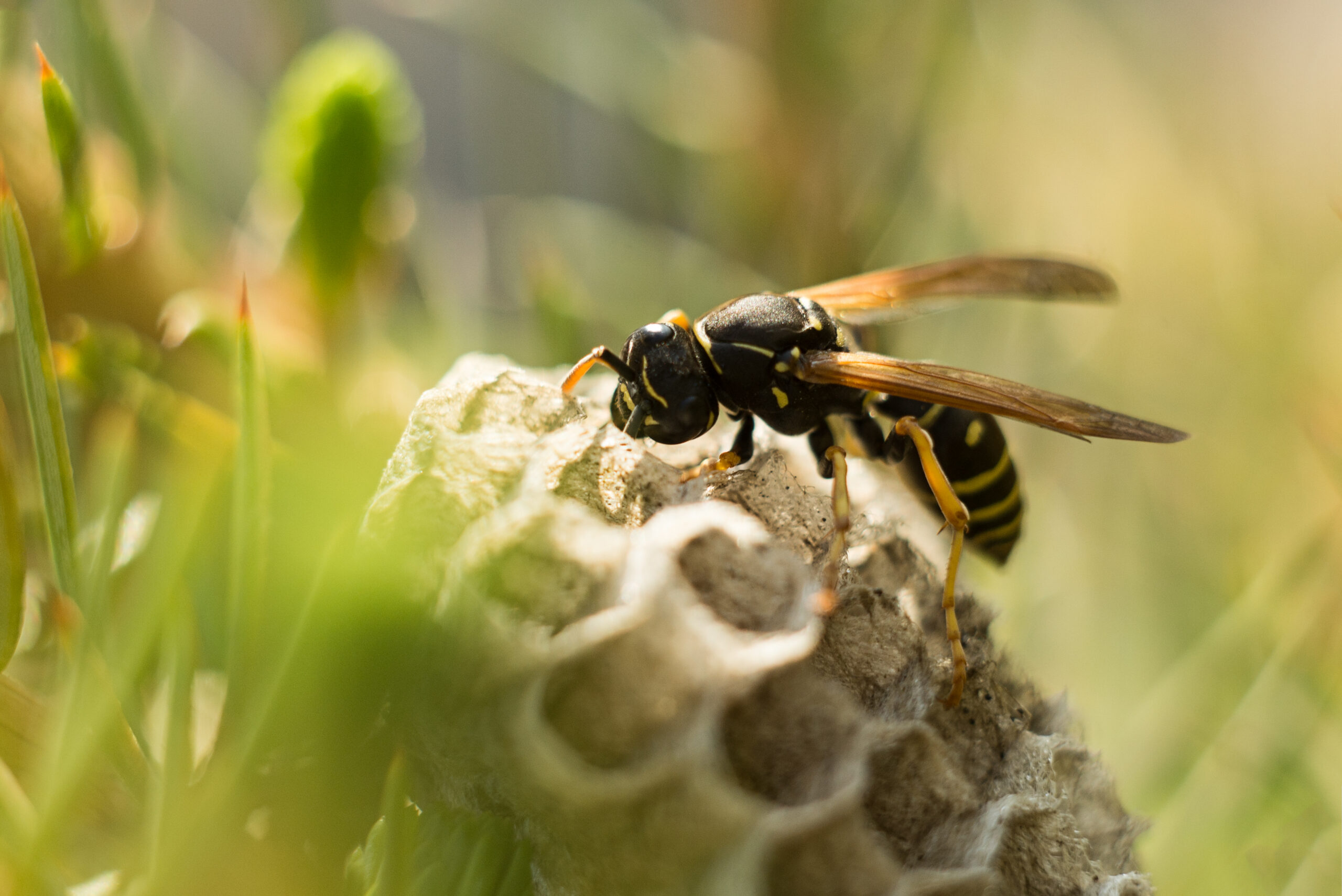
Utah summers mean backyard barbecues, evenings on the patio, and plenty of time outdoors. Unfortunately, they can also mean wasps hovering around your food, garbage cans, deck, or outdoor living spaces.
If you’ve started noticing more wasps in Utah around your property, a wasp trap can be a useful way to reduce activity in specific areas. Traps are widely available at hardware stores, home improvement stores, garden centers, and online. You can also make simple traps at home.
But there’s an important limitation: a trap doesn’t necessarily eliminate the nest.
If wasps have established a nest on or around your property, trapping individual workers may reduce activity without solving the source of the problem. Knowing when a trap is enough, and when it’s time for professional wasp control, can save you a lot of frustration.
Where Can You Buy Wasp Traps in Utah?
Wasp traps are relatively easy to find during Utah’s warmer months. Most hardware stores, garden centers, home improvement retailers, and stores with seasonal pest-control sections carry them.
You’ll generally find two categories.
Disposable Wasp Traps
Disposable traps are designed to be hung outdoors and thrown away once they’re full or no longer effective.
They’re convenient if you’re looking for a simple solution for a patio, picnic area, or other location experiencing occasional wasp activity.
Reusable Wasp Traps
Reusable traps use replaceable attractants or bait and can be emptied, cleaned, and used again.
They can make more sense when wasps are a recurring seasonal problem around your property.
Regardless of which style you choose, make sure the trap is designed for the type of wasp you’re trying to attract and follow the manufacturer’s directions carefully.
Do Wasp Traps Actually Work?
Yes, wasp traps can catch wasps.
The bigger question is whether trapping wasps will solve your particular problem.
A trap can help reduce the number of foraging wasps in an outdoor area. That can be useful around patios, yards, garbage areas, and places where people regularly spend time.
But consider what happens inside an established social wasp colony.
A nest may contain many workers, along with developing wasps and a queen. Removing some foraging workers doesn’t necessarily eliminate the colony producing them.
That’s why you can have a trap catching wasps every day while continuing to see new ones around the property.
The trap is reducing activity. It isn’t necessarily eliminating the source.
Where Should You Put a Wasp Trap?
Placement matters.
One of the easiest mistakes to make is putting the trap directly beside the place where you don’t want wasps.
Remember what the trap is designed to do: attract wasps.
Instead of hanging it directly over your patio table, position it away from high-traffic areas where people and pets spend time. Follow the trap manufacturer’s placement recommendations, since different products use different attractants and designs.
Avoid placing traps directly beside doors or other entrances where increased wasp activity could become a problem.
The goal is to draw activity away from the areas you’re trying to protect—not invite more wasps into them.
What Types of Wasps Are Common in Utah?
Not every flying insect that looks like a wasp behaves the same way.
Utah is home to numerous wasp species, but homeowners commonly encounter social wasps such as yellowjackets and paper wasps, along with a variety of solitary wasps.
Yellowjackets
Yellowjackets are among the wasps most likely to create problems around outdoor meals and garbage.
They’re attracted to sugary foods and drinks as well as proteins. Depending on the species, colonies may nest underground, inside cavities, or in other protected locations.
Because they’re social and defend their nests, activity around a yellowjacket nest should be treated cautiously.
Paper Wasps
Paper wasps create the familiar open-celled paper nests that may appear beneath eaves, porch ceilings, railings, sheds, and other protected structures.
They aren’t usually interested in people, but they may defend a nest when they perceive a threat.
Solitary Wasps
Many solitary wasps behave very differently from yellowjackets.
They generally don’t establish large defensive colonies and can actually be beneficial around gardens because they prey on other insects.
This is why identifying the insect matters before deciding it needs to be eliminated.
When Is Wasp Season in Utah?
Wasp activity follows a seasonal cycle.
In spring, overwintered queens emerge and begin establishing new colonies. Early nests may be very small and relatively easy to overlook.
As temperatures rise through summer, colonies grow and worker populations increase.
By late summer and early fall, homeowners may notice significantly more activity. Colonies are larger, and some wasps become more noticeable around sugary foods, garbage, fallen fruit, outdoor drinks, and meals.
Eventually, colder temperatures cause most colony members to die. Newly produced queens survive the winter in protected locations and begin the cycle again the following year.
That seasonal growth explains why a wasp problem that seemed insignificant in May can feel dramatically different by August.
Why Are Wasps Attracted to My Utah Yard?
If wasps keep appearing, your property may be giving them access to food, water, nesting opportunities, or all three.
Common attractants include:
- Open garbage containers
- Sugary drinks
- Outdoor meals
- Fallen or overripe fruit
- Pet food
- Standing water
- Accessible nesting locations
Some wasps are also hunting insects rather than looking for your food.
A yard with plenty of insect activity can naturally become a productive hunting area.
Can You Make a Homemade Wasp Trap?
Simple homemade traps are commonly made from plastic bottles and sweet bait.
While they may capture some wasps, homemade traps have many of the same limitations as commercial traps. They’re designed to attract and capture individual insects, not necessarily eliminate an established nest.
The bait can also attract insects you didn’t intend to capture.
If you decide to use a DIY trap, position it away from doors, patios, play areas, and other places where people congregate. Never attempt to place a trap directly beside an active nest.
Why Isn’t My Wasp Trap Solving the Problem?
This is where understanding wasp behavior becomes important.
Imagine you’re catching several wasps every day, but activity around the house isn’t noticeably declining.
That’s a clue.
Rather than asking, “Why isn’t my trap working?”, it may be more useful to ask, “Where are all these wasps coming from?”
There could be an established nest nearby continually producing workers.
This is something homeowners sometimes overlook because the nest isn’t always obvious. Depending on the species, it could be under an eave, inside a structural void, beneath the ground, or somewhere else that isn’t immediately visible.
When trapping doesn’t meaningfully reduce activity, finding the source becomes more important than adding more traps.
Should You Remove a Wasp Nest Yourself?
That depends on where the nest is, the species involved, its size, and your ability to approach it safely.
Wasps may defend their nests aggressively when disturbed.
Trying to knock down, spray, flood, burn, or otherwise disturb an active nest can trigger defensive behavior and multiple stings. Never burn a nest or use improvised methods that create additional hazards.
Nests near entrances, play areas, decks, walkways, or other frequently used areas deserve particular caution.
Anyone with a known severe allergy to insect stings should avoid approaching an active nest and seek appropriate professional help.
Wasp Traps vs. Professional Wasp Control
The difference comes down to what you’re trying to accomplish.
If a few wasps occasionally visit your backyard, a strategically placed trap may be enough to make the area more comfortable.
If you’re seeing a steady stream of wasps coming and going from one location, that’s different.
You may be looking at an established nest.
Professional pest control can focus on identifying the species, locating the nesting area, determining how serious the problem is, and selecting an appropriate treatment strategy.
Instead of continually catching workers, the objective is to address what’s producing them.
How to Prevent Wasps Around Your Home
Wasp prevention starts before a nest becomes large.
During spring and early summer, occasionally inspect areas where nests commonly appear, particularly around eaves, sheds, covered patios, play structures, and other protected areas.
Reducing food sources also helps. Keep garbage containers closed, clean up spills after outdoor meals, pick up fallen fruit, and avoid leaving sweet drinks outside.
Check the exterior of your home for gaps and openings that could provide access to protected voids.
Early detection is especially valuable because a newly developing nest is very different from a mature colony containing a large number of workers.
What We’ve Learned About Wasp Problems: Follow the Traffic
One of the most useful ways to evaluate persistent wasp activity is simply to watch from a safe distance.
An occasional wasp wandering around flowers doesn’t necessarily indicate an infestation.
Repeated traffic to and from the same location is much more informative.
If wasps consistently disappear beneath the same eave, into the same opening, or toward the same area of the yard, there’s a good chance something nearby is supporting that activity.
That’s when adding another trap may not be the most useful next step.
The goal shifts from catching wasps to identifying the source.
Are Wasps Beneficial?
Yes—and this is an important part of the conversation.
Wasps aren’t simply pests.
Many species prey on caterpillars, flies, and other insects, helping regulate insect populations naturally. Some also visit flowers and contribute to pollination.
That doesn’t mean you should tolerate an aggressive colony beside your front door.
It does mean that not every wasp needs to be killed simply because it’s a wasp.
A solitary wasp hunting insects in the garden is very different from a large yellowjacket colony beside a patio.
Good pest management recognizes the difference.
Frequently Asked Questions About Wasps in Utah
What’s the best wasp trap for Utah?
The best option depends on the species you’re dealing with and where you’re experiencing activity. Look for traps specifically labeled for the target wasp and use them according to the manufacturer’s instructions.
Do wasp traps attract more wasps?
Wasp traps use attractants, so they intentionally draw wasps toward the trap. That’s why placement away from patios, doors, and gathering areas is important.
Why do I have so many wasps in late summer?
Social wasp colonies grow throughout the warmer months. By late summer, colonies can contain far more workers than they did during spring, making activity much more noticeable.
Will a wasp trap get rid of a nest?
Usually not by itself. Traps primarily capture foraging wasps. An established colony may continue producing workers until the nest itself is addressed or the colony naturally declines with the season.
When should I call pest control for wasps?
Professional help is worth considering when you’ve located an active nest near people or pets, wasps are entering a structural opening, activity is persistent despite trapping, or approaching the nest could expose you to multiple stings.
Bottom Line
Effective wasp traps are easy to find throughout Utah, and they can be useful for reducing occasional wasp activity around your property.
But traps have limits.
If you’re catching wasps continuously or seeing repeated traffic around the same part of your home, there may be an established nest nearby. At that point, catching individual workers may not address what’s causing the problem.
Preventive Pest Control can help identify the source of persistent wasp activity in Utah, determine the appropriate approach, and help protect the areas around your home where your family actually spends time.