
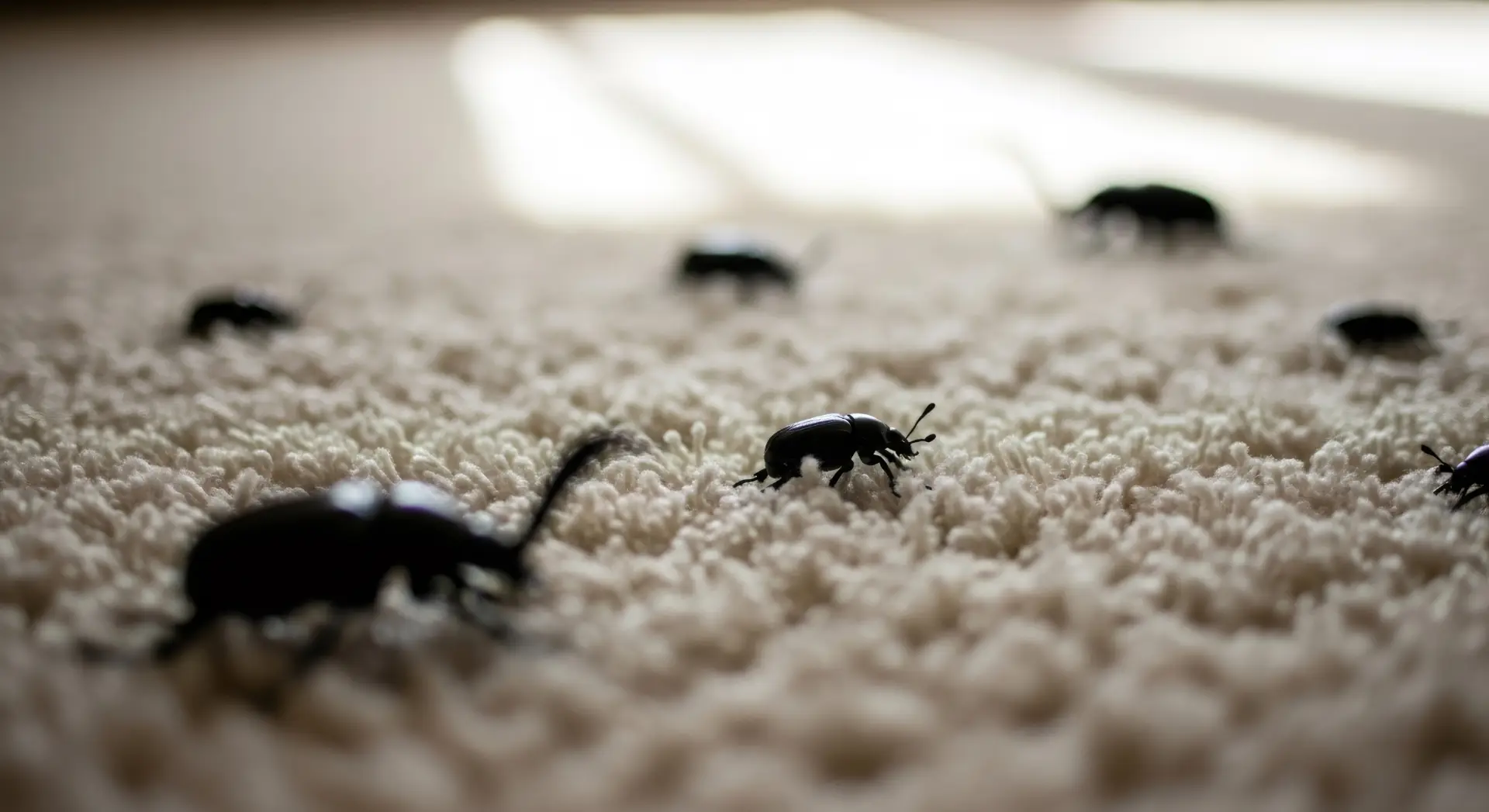
Carpet beetles are one of the most common fabric-damaging pests found inside homes, yet they are often mistaken for moths, fleas, or even wood-boring insects like carpenter ants or termites. Because carpet beetles cause damage quietly and gradually, knowing the early signs is essential for preventing costly repairs or ruined belongings.
This guide will walk you through the key signs of carpet beetle damage, how to confirm you’re dealing with carpet beetles, their seasonal activity patterns, and what steps to take next.
How to Identify Carpet Beetle Damage
Visual Signs of a Carpet Beetle Infestation
Carpet beetle larvae are responsible for nearly all the damage. Their feeding leaves behind irregular holes in fabrics, thinning patches in carpets, and areas where fibers appear scraped or grazed away. Unlike moth damage, which tends to be more uniform, carpet beetle damage looks scattered, uneven, and inconsistent. Homeowners may also find shed larval skins, small bristle-covered bodies, or tiny adult beetles near window sills.
Confirming Carpet Beetle Identification
True carpet beetle larvae are small, carrot-shaped, and covered with fine bristles. Adults are oval-shaped, often with mottled coloring in white, brown, or black. Spotting larvae near baseboards, inside closets, or around air vents is one of the clearest signs of active feeding. A common confirmation method is placing a white cloth in suspected areas—larvae often crawl across it in search of food sources.
Seasonal Activity of Carpet Beetles
Carpet beetles are active year-round indoors, but you may notice an increase in adult beetles during late spring and summer. This is when adults emerge and fly toward natural light, often gathering near windows. Damage, however, typically accumulates during winter and early spring when larvae feed quietly in dark, protected areas of the home.
Understanding the Damage Caused by Carpet Beetles
Types of Damage to Fabrics and Natural Materials
Carpet beetle larvae feed on natural fibers such as wool, silk, feathers, leather, felt, and fur. Clothing left in storage, upholstered furniture, area rugs, and decorative textiles are especially vulnerable. You may notice thinning fabric, small holes, or patches where fibers have been eaten completely away.
Speed of Carpet Beetle Damage
Because larvae feed slowly over time, damage builds gradually. A single larva may feed for weeks or months before pupating. If multiple larvae are active, significant damage can accumulate before homeowners realize a problem exists.
Impact on Non-Fabric Materials
Although called “carpet beetles,” these pests sometimes feed on pet hair, lint, dead insects, and even dried plant matter. They do not damage wood structures like carpenter ants or termites, but they may infest wooden furniture that contains natural fiber padding, felt lining, or animal-based adhesives.
Preventive Measures for Carpet Beetles
Best Practices for Prevention
Regular cleaning is the most effective prevention tool. Vacuuming edges of carpets, air vents, and beneath furniture removes food sources like lint and pet hair. Washing or dry cleaning clothing before storage, especially natural fibers, prevents larvae from finding nourishment.
Protecting Clothing and Fabric
Storing items in sealed containers, using garment bags, and keeping closets clean helps prevent infestations. Cedar blocks or lavender sachets can deter adult beetles from laying eggs, though they are not strong enough to eliminate an active infestation.
Natural Deterrents for Carpet Beetles
Homeowners often use vinegar for surface cleaning because it removes potential pheromone trails and makes surfaces less appealing to beetles. Essential oils such as eucalyptus, clove, or peppermint may provide mild deterrence but work best as complementary measures rather than primary solutions.
Necessary Actions After Identifying Carpet Beetles
Dealing With Infestation Discovery
When you’ve discovered damage, immediate action is crucial. Begin by laundering affected items, vacuuming thoroughly, and inspecting surrounding rooms. Because larvae wander, the infestation may not be located directly where the damage is found.
Calling Professional Pest Control Services
If you see carpet beetles repeatedly, or if damage appears in several rooms, professional intervention is recommended. Experts can locate hidden nests, treat wall voids and ductwork, and apply long-lasting insecticides that homeowners can’t access.
DIY Solutions for Carpet Beetles
Some homeowners begin with DIY methods such as using diatomaceous earth in cracks, freezing delicate items that cannot be washed, or using sticky traps to monitor adults. While useful for mild issues, DIY alone rarely eliminates an established infestation.
Unique Insights About Carpet Beetles
Carpet Beetles vs. Other Wood-Damaging Insects
Unlike carpenter ants or termites, carpet beetles do not chew or tunnel through wood. Any wood-related damage is almost always caused by separate pests. This is one of the easiest diagnostic distinctions for homeowners.
Can Carpet Beetles Spread Throughout a Home?
Yes. Their larvae wander long distances in search of food. An infestation beginning in one closet may spread to multiple rooms within months.
Environmental Conditions That Attract Carpet Beetles
Warmth, humidity, and undisturbed spaces are ideal environments. Homes with pets, stored wool clothing, or dusty vents face increased risk.
Distinguishing Damage vs. Natural Wear
Natural wear tends to be gradual and consistent. Carpet beetle damage appears irregular, spotty, and frequently accompanied by cast skins or shed hairs—signs that natural wear does not produce.
Are Carpet Beetles Harmful to Humans?
Carpet beetles do not bite, but their tiny hairs can cause skin irritation or allergy-like symptoms in some individuals, especially after prolonged exposure to infested materials.
Do Carpet Beetles Make Noise?
Unlike wood-boring insects, carpet beetles make no audible sounds. Silence is typical, which is why damage often goes unnoticed until it’s visible.
Technological Tools for Identification
Smartphone magnifiers, handheld UV flashlights, and pest-ID apps can help homeowners distinguish carpet beetle larvae from other household insects.
Call Preventive Pest Utah for Professional Assistance
Carpet beetles can cause frustrating and costly damage—but early detection makes all the difference. If you’re finding holes in clothing or worn patches in carpets, or if you’re unsure what pest is responsible, the experts at Preventive Pest Utah can inspect your home, identify the source, and implement long-term prevention solutions.