
If you’ve spotted large black ants around your home, you might be wondering: Are these carpenter ants and should I be worried?
For many Utah homeowners, carpenter ants are surrounded by confusion. Some believe they destroy homes as quickly as termites, while others assume they’re harmless.
The truth lies somewhere in between.
Understanding carpenter ants in Utah, what they are, how they behave, and what they actually do can help you avoid costly mistakes and respond appropriately.
Identifying Carpenter Ants in Utah
Correct identification is the first step in determining whether you have a problem.
What Do Carpenter Ants Look Like?
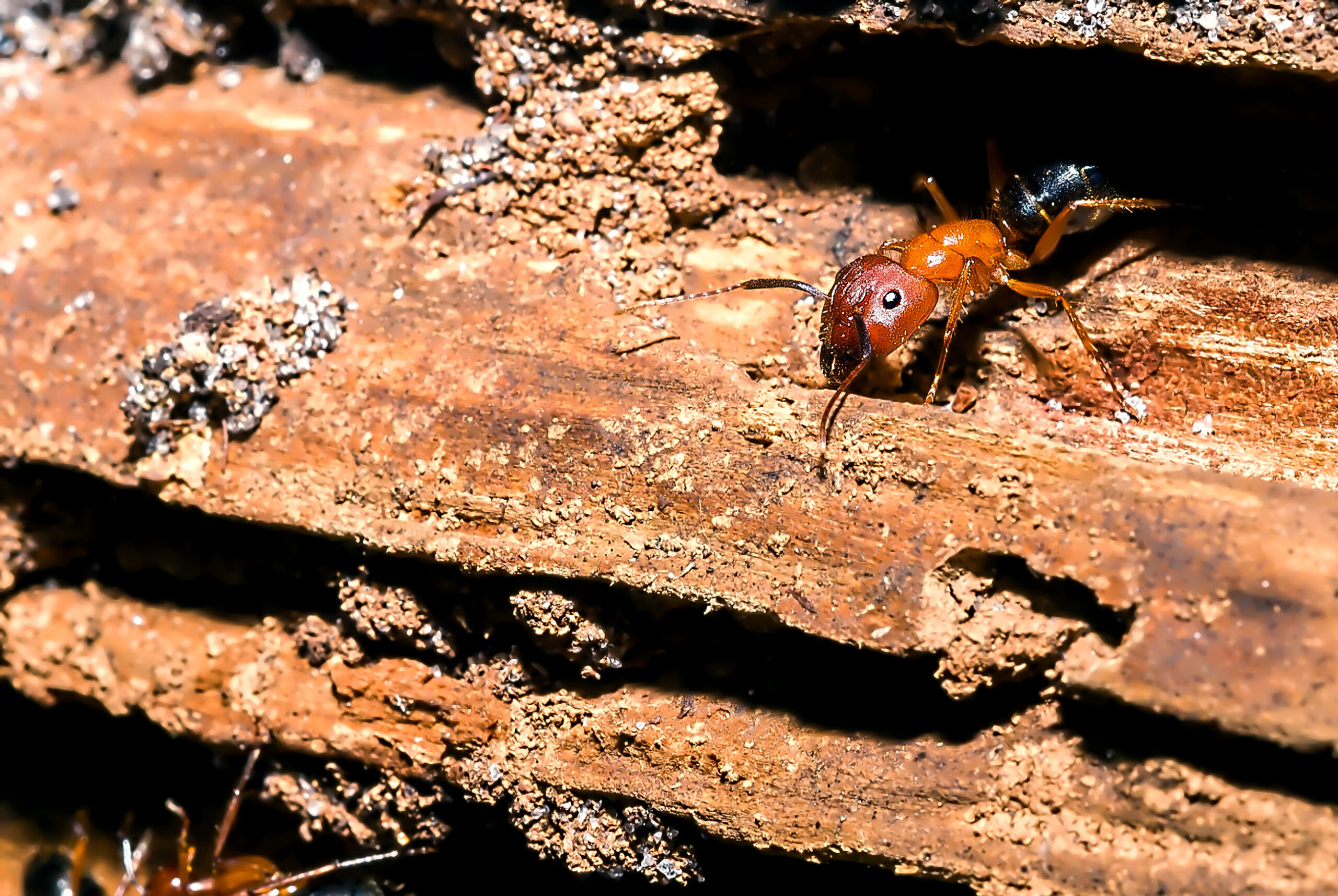
Carpenter ants are among the largest ants found in Utah. They are typically:
- Black, dark brown, or a combination of red and black
- Between ¼ inch to ½ inch long
- Smooth-bodied with a rounded thorax
Their size alone often makes them stand out compared to smaller household ants.
How to Differentiate Carpenter Ants From Other Ants
One of the easiest ways to distinguish carpenter ants is by their size and shape.
Unlike many smaller ants, carpenter ants have:
- A single node (waist segment)
- A smooth, evenly rounded back
- No spines on their thorax
They are often confused with other large ants, but these features help set them apart.
Unique Features of Carpenter Ants in Utah
In Utah, carpenter ants are often found near wooded areas or homes with moisture issues. They are especially drawn to damp or decaying wood, which makes certain properties more vulnerable than others.
Behavior and Habitat of Carpenter Ants in Utah
Understanding where carpenter ants live and how they behave is key to identifying an infestation.
Where Do Carpenter Ants Nest?
Carpenter ants don’t eat wood, but they do excavate it to build their nests.
Common nesting areas include:
- Damp or rotting wood
- Tree stumps and logs
- Wall voids and insulation
- Window and door frames
They often create “satellite colonies,” meaning you may see ants indoors even if the main nest is outside.
When Are Carpenter Ants Most Active?
Carpenter ants in Utah are most active during warmer months, especially spring and summer. However, indoor colonies can remain active year-round if conditions are favorable.
They are primarily nocturnal, meaning you may notice increased activity at night.
How Utah’s Climate Affects Behavior
Utah’s dry climate typically limits carpenter ant activity, but moisture changes everything.
Homes with leaks, poor drainage, or high humidity create ideal conditions for carpenter ants to thrive.
Potential Damage Caused by Carpenter Ants in Utah
This is where myths and facts often get mixed up.
Do Carpenter Ants Damage Homes?
Fact: Carpenter ants can damage wood, but not in the same way termites do.
They hollow out wood to create galleries (tunnels), which can weaken structures over time if left untreated.
How Quickly Can Damage Occur?
Damage from carpenter ants happens slowly. However, large or long-term infestations can become serious.
Unlike termites, they don’t consume wood, but their nesting activity can still compromise structural integrity.
Are They a Common Problem in Utah?
Carpenter ants are less common in Utah than in more humid regions, but they do occur, especially in areas with:
- Irrigation systems
- Wood-heavy construction
- Moisture-prone environments
My Experience: Misidentifying Carpenter Ants in Utah
One of the most common scenarios homeowners face is misidentification.
“I thought I had termites because I saw large ants near my window frame.”
In reality, it turned out to be carpenter ants attracted to moisture from a small leak.
This kind of confusion is extremely common. Many people assume the worst without understanding the differences between pests.
Learning to identify the signs early can save both time and unnecessary stress.
Managing Carpenter Ant Infestations in Utah
If you suspect carpenter ants, early action is important.
Effective Methods for Removing Carpenter Ants
The most effective approach involves targeting the colony itself.
Common methods include:
- Bait systems to eliminate the colony
- Moisture control to remove attractants
- Locating and treating nesting sites
Simply spraying visible ants is rarely enough.
Preventing Carpenter Ant Infestations
Prevention is often the best long-term strategy.
Focus on:
- Fixing leaks and reducing moisture
- Sealing cracks and entry points
- Maintaining proper ventilation
These steps make your home less attractive to nesting ants.
Can Professional Pest Control Help?
Yes, especially for larger infestations.
Professional pest control services can:
- Identify nesting locations
- Apply targeted treatments
- Prevent future infestations
This is often the fastest and most reliable solution when colonies are well established.
Myths vs. Facts About Carpenter Ants in Utah
Let’s clear up some of the most common misconceptions.
Myth: Carpenter ants eat wood
Fact: They excavate wood but do not consume it
Myth: They are as destructive as termites
Fact: They can cause damage, but typically more slowly
Myth: Seeing one ant means no problem
Fact: Visible ants often indicate a larger hidden colony
Myth: They only live outdoors
Fact: They often establish indoor satellite colonies
Bottom Line
Carpenter ants in Utah are often misunderstood, but they shouldn’t be ignored.
While they are not as aggressive or destructive as termites, they can still cause structural damage over time, especially in homes with moisture issues.
The key is early identification, proper prevention, and addressing problems before they grow.
If you’re seeing repeated ant activity or suspect a hidden colony, taking action now can prevent more serious damage later.